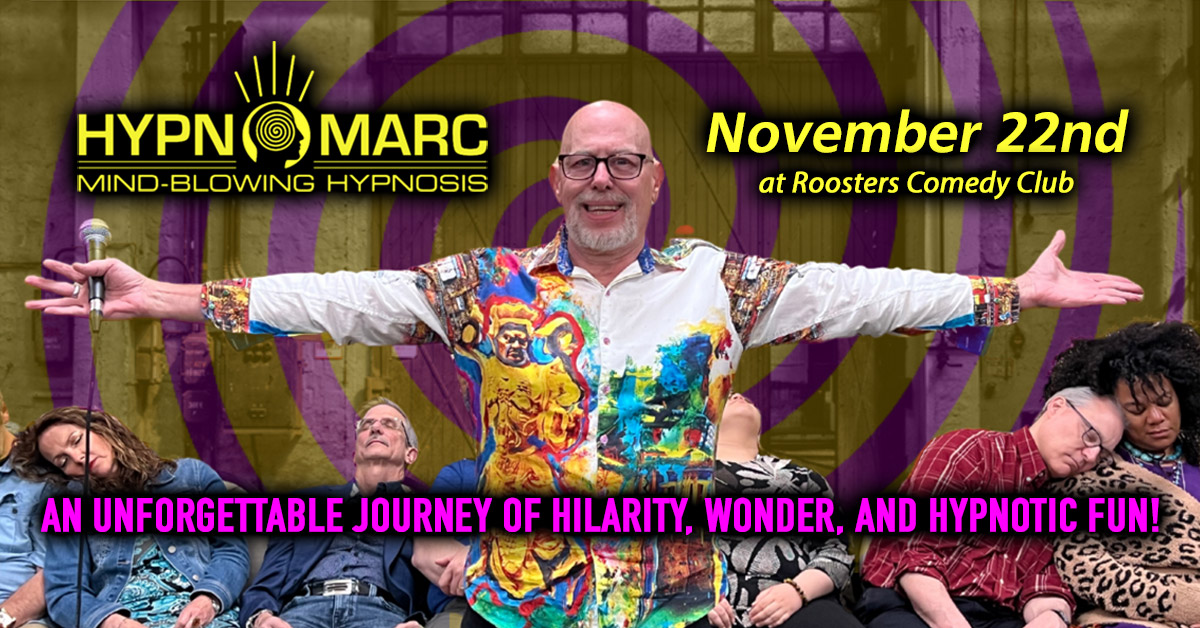
The 7 Hidden Principles Behind Every Great Comedy Hypnosis Show

It’s Not Chaos — It’s Choreography

People often ask, “How do you get total strangers to do those crazy things on stage?”
Simple answer: it’s not mind control. It’s mind choreography — built on seven hypnotic principles that make audiences laugh, volunteers shine, and skeptics believe.

When you understand what’s really happening beneath the laughter, you realize every great comedy hypnosis show is part art, part psychology, and part magic.

1️⃣ Focus of Attention

Comedy hypnosis begins long before anyone closes their eyes.
The hypnotist’s first job is to focus the audience’s attention — through humor, surprise, or curiosity.
The moment you laugh or lean in, your attention narrows, and that focus is the first step into trance.
As I like to say: where attention goes, hypnosis flows.


2️⃣ Bypass of the Critical Mind

Laughter is the world’s friendliest trance inducer.
When people laugh, they stop analyzing.
That’s why jokes, stories, and playful challenges are built into every induction — each laugh opens the subconscious a little wider.


3️⃣ Utilization of Expectation

Expectation is hypnosis fuel.
From the first line of the pre-talk, the audience is primed to expect something amazing.
That anticipation becomes the permission slip for the subconscious to play.
The mind follows what it believes will happen — so we build belief first, and trance follows.


4️⃣ Pacing and Leading

Every volunteer starts nervous or skeptical.
The hypnotist matches that state — using humor, rapport, and rhythm — then gently leads them into comfort, focus, and imagination.
This pacing builds trust, and trust builds compliance.


5️⃣ Progressive Dissociation

This is where the fun begins.
The conscious and subconscious split just enough for new possibilities to emerge.
That’s why someone can know they’re on stage yet genuinely forget their name or think they’re Elvis.
The conscious mind steps aside so the creative mind can perform.


6️⃣ Anchoring and Association

Every word, gesture, or song cue becomes an anchor.
When I say, “Sleep!” or snap my fingers, the body reacts instantly because the subconscious links that signal to trance.
Anchors keep the show tight, repeatable, and wildly entertaining.


7️⃣ Fractionation and Reinforcement

Each return to hypnosis deepens the response.
Volunteers wake up laughing, then drop back down even faster.
The repetition strengthens the experience — like layering laughter and trance until both hit peak intensity.


Why It Works

What the audience sees as spontaneous chaos is actually a beautifully orchestrated blend of psychology, timing, and suggestion.
The volunteers aren’t under control — they’re free of inhibition.
They’ve entered a focused, creative state where imagination becomes reality and laughter becomes the language of trance.

That’s the real magic of a comedy hypnosis show:
it’s entertainment powered by the subconscious.


Experience It Live

🎟️ Don’t just watch hypnosis — feel it.
Catch HypnoMarc’s Hypnotic Hijinks Comedy Hypnosis Show at Rooster T. Feathers Comedy Club, Nov 22 @ 8:00 PM.
👉 Get tickets now at 541tickets.com before they disappear faster than your sense of dignity on stage.


#Hypnosis #ComedyHypnosis #HypnoMarc #StageHypnosis #HypnoticHijinks #LiveComedy #MindPower #Entertainment


Halloween Horror Nights 2025: Why Art the Clown Is Re-Igniting America’s Fear of Clowns

Halloween Horror Nights 2025
Why Art the Clown Is Re-Igniting America’s Fear of Clowns

Just in time for Halloween, Universal Studios’ Halloween Horror Nights 2025 has unleashed a new nightmare—Art the Clown. Fans are calling it one of the most terrifying HHN experiences ever, and for people already uneasy around clowns, it’s pure nightmare fuel.

Every year around this season, I get phone calls from people with one very specific phobia: coulrophobia—the fear of clowns. And when a cultural icon of horror like Art steps into the spotlight, that fear skyrockets. People feel trapped, anxious, even paralyzed—sometimes weeks before they set foot in a haunted attraction.

Why Clowns Trigger So Much Fear

The unease isn’t random—it’s deeply wired into how our brains process danger.

  • Generational split: Boomers grew up with Bozo and Clarabel—clowns were goofy, harmless fun.
  • The darker turn: Gen-X and Gen-Y were blindsided by John Wayne Gacy, the “Killer Clown,” in the 1970s. Laughter turned to terror overnight.
  • Pop culture fuel: From Pennywise (IT) to Twisty (American Horror Story) to The Joker, clowns became the perfect vessel for evil. Now, Art the Clown is cementing his place at the top of that horrifying lineup.

As Olivia Goldhill wrote in The Telegraph:

“The more you stare at a clown’s perpetually smiling face, the more it warps into something more sinister.”

That frozen smile, the distorted features, the unnatural exaggeration—it all taps straight into the fight-or-flight center of your brain. And once your subconscious files “clown = danger,” the fear loop begins.

Why Halloween Makes It Worse

October is clown season. They’re not just on movie posters anymore—they’re in haunted houses, on front lawns, in commercials, and now headlining the premier Halloween event in the country.

For someone with coulrophobia, it’s not fun—it’s exhausting. Every sighting reinforces the fear, and every avoidance strengthens the loop that keeps the phobia alive.

Hypnosis: The Secret Weapon Against Phobias

Phobias aren’t just “in your head.” They’re subconscious loops—old fear tapes your brain keeps replaying. Hypnosis allows you to rewrite those loops at the source.

I’ve worked with clients paralyzed by fears of clowns, snakes, spiders, heights, bridges—you name it. Once we address the root trigger, the fear dissolves. Imagine being able to walk through HHN—or past a clown costume in the street—without that spike of terror.

Time is Short—Halloween Is Here

This is the moment to decide:

  • Keep avoiding clowns—and spend October stressed, anxious, and on edge.
  • Or break free now—and enjoy the season without panic.

My hypnosis sessions for October book quickly. Once they’re gone, that’s it—you’ll be facing Halloween with the same fear you’ve always had.

STOP letting fear win.
START living free from anxiety.
ACT NOW before Art the Clown becomes your worst nightmare.

Contact me at info@hypnomarc.com or visit www.hypnomarc.com to secure your session today.

About Marc Marshall, CPH

Marc Marshall is a certified comedy hypnotist and clinical hypnotist, author, and motivational speaker who has spent more than 50 years helping people break free from limitations. On stage, his Hypnotic Hijinks of HypnoMarc comedy hypnosis show has entertained audiences across the country with laughter, wonder, and unforgettable experiences.

Off stage, Marc specializes in helping clients resolve trauma, fears, phobias, and stress management—transforming lives through the power of hypnosis. His programs have helped people worldwide eliminate anxiety, overcome phobias, manage pain, quit smoking, and unlock lasting confidence.

Marc is also the author of several books, including:

  • Perception Equals Reality — breaking free from self-limiting beliefs.
  • Your Search is Over: The Ultimate Guide to Finding Your Soulmate — blending hypnosis, coaching, and healing to attract deep connections.
  • Staying in the Moment: Helping Students Achieve More Through Mindfulness Meditation — a guide for educators and students alike.
  • And his soon to be released – There’s No Such Thing As Try

Through both his stage shows and clinical work, Marc’s mission is simple: to help people laugh harder, live freer, and release what holds them back.

Fear doesn’t take the night off at Halloween Horror Nights. But with hypnosis, you can.

(All photos property of respective studios)

“Why Disaster Survivors Swear By This PTSD Game-Changer: Could Hypnosis Be Your Missing Link?”

Have you ever felt like your mind was stuck in a time loop, constantly replaying the scariest moments of your life? Whether you’ve survived a natural disaster or you’re a first responder who’s witnessed the aftermath, you might know this feeling all too well. But what if I told you there’s a technique that could help you press the ‘fast forward’ button on those memories? Enter the world of hypnosis – the unexpected ally in the battle against Post-Traumatic Stress Disorder (PTSD) that’s got both survivors and helpers buzzing.

Now, before you picture a mysterious figure swinging a pocket watch and saying “You are getting very sleepy,” let me assure you – real hypnosis is nothing like what you see in the movies. It’s more like a mental yoga class for your brain, minus the awkward poses and sweaty mats.

As someone who’s spent over 40 years in emergency services and worked extensively with disaster survivors, I’ve witnessed firsthand the toll that natural disasters can take on the human psyche – for both those directly affected and those who come to help. But I’ve also seen the incredible resilience of the human spirit – especially when given the right tools for healing. And let me tell you, hypnosis might just be the power tool your mental toolkit is missing.

Understanding PTSD in the Context of Natural Disasters

Post-Traumatic Stress Disorder is a mental health condition that can develop after experiencing or witnessing a traumatic event. Natural disasters, with their sudden onset and potential for widespread destruction, can be significant triggers for PTSD.

The National Center for PTSD, a division of the U.S. Department of Veterans Affairs, reports that 30-40% of direct disaster victims may experience PTSD. These rates can vary depending on the severity and type of disaster, as well as individual factors.

Symptoms of PTSD can include:

– Intrusive memories or flashbacks
– Avoidance of reminders of the traumatic event
– Negative changes in thinking and mood
– Changes in physical and emotional reactions

For those who’ve lived through a natural disaster, these symptoms might manifest as intense anxiety during storms, difficulty sleeping, or emotional distress when seeing images of similar disasters.

The Impact on Both Survivors and Responders

It’s not just direct victims who can experience PTSD. First responders and emergency service workers are also at risk. A study published in the Journal of Occupational Health (Nishi et al., 2012) found that rescue workers involved in earthquake response had higher rates of PTSD symptoms compared to the general population.

For survivors, PTSD might mean reliving the terror of the disaster every time it rains or the wind picks up. For responders, it could manifest as guilt over those they couldn’t save or anxiety about facing future disasters.

Traditional Approaches to PTSD Treatment

The primary treatments for PTSD, as recommended by the American Psychological Association, include:

1. Cognitive Behavioral Therapy (CBT)
2. Cognitive Processing Therapy (CPT)
3. Prolonged Exposure Therapy (PE)
4. Eye Movement Desensitization and Reprocessing (EMDR)

These evidence-based treatments have shown significant effectiveness in helping individuals manage and overcome PTSD symptoms.

The Mighty Impact of Hypnosis on PTSD

While traditional therapies play a crucial role in PTSD treatment, hypnosis offers unique benefits that can supercharge the healing journey for both survivors and responders:

1. **Rapid Relaxation**: Hypnosis can quickly induce a state of deep relaxation, providing immediate relief from the constant tension that often accompanies PTSD.

2. **Memory Reframing**: Through hypnosis, many individuals find they can revisit traumatic memories without reliving the intense emotions, allowing for peaceful resolution.

3. **Symptom Management**: Hypnotic techniques have shown promise in managing specific PTSD symptoms like insomnia, anxiety, and flashbacks.

4. **Empowerment**: Hypnosis can help you tap into your inner resources, fostering a sense of control over your healing process.

5. **Complementary Power**: When used alongside evidence-based treatments, hypnosis may enhance their effectiveness, potentially leading to faster recovery.

Real Stories, Real Change

I’ve seen firsthand how hypnosis can transform lives for both disaster survivors and first responders.

Take Sarah, for instance. After surviving a devastating hurricane, she couldn’t even look at rain clouds without panicking. But after just a few hypnosis sessions, she was dancing in the rain (literally – I have the video to prove it!).

Or consider Mike, a fellow first responder who struggled with debilitating flashbacks of a particularly harrowing rescue operation. Hypnosis helped him regain control of his mind, and now he’s back to saving lives with a clear head and steady hands.

Then there’s Maria, who lost her home in a flood. Through hypnosis, she was able to process her grief and fear, eventually finding the strength to rebuild not just her home, but her sense of security.

The Science Behind the Magic

Now, I know what you’re thinking – this sounds too good to be true. But there’s real science backing up the power of hypnosis. A study published in the International Journal of Clinical and Experimental Hypnosis (Lynn et al., 2012) suggested that hypnosis can be a valuable adjunct to evidence-based PTSD treatments.

Another study in the American Journal of Clinical Hypnosis (Abramowitz et al., 2008) found that combining hypnotherapy with psychodynamic therapy showed promising results in reducing PTSD symptoms.

How Hypnosis Can Help

Proponents of hypnosis in PTSD treatment suggest it may help in several ways:

1. Relaxation: Hypnosis often involves deep relaxation techniques, which may help manage anxiety and stress.

2. Reframing: In a hypnotic state, individuals might be able to revisit traumatic memories in a controlled way, potentially helping to reframe these experiences.

3. Symptom Management: Some practitioners use hypnotic suggestions to help manage specific PTSD symptoms, like improving sleep or reducing flashbacks.

However, it’s crucial to understand that these potential benefits are still being researched, and hypnosis should not be seen as a standalone treatment for PTSD.

The Importance of Professional Guidance

If you’re considering hypnosis as a complementary approach to PTSD treatment, it’s essential to work with a qualified mental health professional. They can help determine if hypnosis might be appropriate for your specific situation and ensure it’s used in conjunction with evidence-based treatments.

The American Society of Clinical Hypnosis (ASCH) provides certification for health care professionals who use hypnosis in their practice. When seeking a practitioner, look for someone with proper credentials in both mental health and hypnosis.

## Your Journey to Healing Starts Here

If you’re ready to explore the transformative power of hypnosis in your PTSD recovery journey, I’m here to help. With over four decades of experience in emergency services and specialized training in hypnotherapy, I offer both individual and group sessions tailored to the unique needs of natural disaster survivors and first responders.

Why Choose My Hypnosis Sessions?

1. **Expertise**: 40+ years of frontline experience combined with advanced hypnotherapy training.
2. **Customization**: Sessions tailored to your specific trauma and symptoms, whether you’re a survivor or a responder.
3. **Supportive Environment**: A safe, judgment-free space for healing.
4. **Holistic Approach**: Hypnosis techniques that complement your existing treatments.
5. **Flexible Options**: Choose from individual or group sessions to suit your comfort level.

Take the First Step Today

Don’t let another day go by feeling trapped by your trauma. The key to unlocking your mind’s healing potential could be just a click away.

**Click this link now to schedule your consultation**

Hey Marc – Let's Talk

Or email me at info@hypnomarc.com to learn more about how hypnosis can be your secret weapon against PTSD.

Remember, whether you’re a survivor who’s weathered the storm or a responder who’s rushed in to help, you’ve already shown incredible strength. Now it’s time to reclaim your peace of mind. Let’s unlock the power of your mind together.

Moving Forward

Every individual’s experience with PTSD is unique, and there’s no one-size-fits-all solution. What works for one person may not work for another, which is why a personalized treatment plan developed with a mental health professional is crucial.

Whether through traditional therapies, complementary approaches like hypnosis, or a combination of methods, healing is possible. The first step is reaching out for help.

Resources for Support

If you’re in crisis or need immediate support, please contact:

– National Suicide Prevention Lifeline: 1-800-273-8255 or dial 988
– SAMHSA’s National Helpline: 1-800-662-4357

For more information on PTSD and treatment options:

– National Center for PTSD: https://www.ptsd.va.gov/
– American Psychological Association: https://www.apa.org/ptsd-guideline

Remember, you’re not alone in this journey. With proper support and treatment, it’s possible to manage PTSD symptoms and reclaim your sense of wellbeing after a natural disaster.

References:

Abramowitz, E. G., Barak, Y., Ben-Avi, I., & Knobler, H. Y. (2008). Hypnotherapy in the treatment of chronic combat-related PTSD patients suffering from insomnia: a randomized, zolpidem-controlled clinical trial. International Journal of Clinical and Experimental Hypnosis, 56(3), 270-280.

Lynn, S. J., Malakataris, A., Condon, L., Maxwell, R., & Cleere, C. (2012). Post-traumatic stress disorder: cognitive hypnotherapy, mindfulness, and acceptance-based treatment approaches. American Journal of Clinical Hypnosis, 54(4), 311-330.

Nishi, D., Koido, Y., Nakaya, N., Sone, T., Noguchi, H., Hamazaki, K., … & Matsuoka, Y. (2012). Peritraumatic distress, watching television, and posttraumatic stress symptoms among rescue workers after the Great East Japan earthquake. PloS one, 7(4), e35248.

Trance-form Your Finances: Can Hypnosis Help with Economic Stress?

Trance-form Your Finances: Can Hypnosis Help with Economic Stress?

In today’s volatile economic climate, financial stress has become a common experience for many. With rising costs of living and economic uncertainties, it’s no wonder that many are seeking new ways to manage their financial anxiety. One intriguing approach that’s gaining attention is hypnosis. But can this method really help with economic stress? Let’s dive into what the science actually says.

The Economic Anxiety Epidemic: It’s Not Just You

Before we explore hypnosis as a potential solution, it’s important to understand the scope of the problem. Financial stress is a widespread issue, affecting a significant portion of the population.

According to the American Psychological Association’s Stress in America 2022 survey, 65% of adults said money is a significant source of stress [1]. This high level of financial stress can have serious implications for both mental and physical health.

Hypnosis: More Than Just a Party Trick

While many people associate hypnosis with stage performances or movie portrayals, it’s actually a recognized therapeutic technique. The American Psychological Association defines hypnosis as a state of consciousness involving focused attention and reduced peripheral awareness characterized by an enhanced capacity for response to suggestion [2].

In a clinical setting, hypnosis (also called hypnotherapy) is used as a tool to help people manage various conditions, including stress and anxiety.

How Hypnosis Might Help with Economic Stress

While there isn’t specific research on hypnosis for economic stress, studies have shown its effectiveness in managing general stress and anxiety, which are key components of financial worries.

  1. **Stress Reduction**: A 2013 study published in the journal Complementary Therapies in Clinical Practice found that participants who received hypnosis experienced significant decreases in stress [3].
  1. **Anxiety Management**: A 2019 systematic review and meta-analysis published in the International Journal of Clinical and Experimental Hypnosis concluded that hypnosis was more effective than relaxation training in reducing anxiety [4].
  1. **Improved Sleep**: Financial worries often lead to sleep problems. A 2018 study in the Journal of Clinical Sleep Medicine found that hypnosis can be an effective intervention for some sleep disorders [5].
  1. **Enhanced Focus**: Better focus can lead to improved financial decision-making. A 2017 study in the journal Neuroscience of Consciousness found that highly hypnotizable individuals showed improved focused attention [6].

The Hypnotic Process: What to Expect

If you’re considering hypnotherapy for stress management, here’s a general outline of what you might expect:

  1. **Initial Consultation**: You’ll discuss your concerns and goals with the hypnotherapist.
  1. **Induction**: The therapist will guide you into a state of relaxation.
  1. **Suggestion Phase**: While you’re in a relaxed state, the therapist will offer positive suggestions related to your goals.
  1. **Conclusion**: You’ll be guided back to full awareness.

It’s important to note that hypnosis is not a standalone treatment for financial problems. It’s a complementary approach that may help manage the stress and anxiety associated with financial difficulties.

Is Hypnosis Right for You?

While research shows promise for hypnosis in stress management, it’s not a one-size-fits-all solution. The effectiveness can vary from person to person.

If you’re considering hypnosis for economic stress, it’s crucial to:

  1. Consult with a qualified, licensed professional.
  2. Understand that hypnosis is a complementary approach, not a substitute for financial planning or mental health treatment.
  3. Be open to the experience, as the effectiveness of hypnosis can be influenced by the individual’s expectations and beliefs.

Conclusion

While hypnosis isn’t a magic solution to economic problems, research suggests it could be a helpful tool in managing the stress and anxiety that often accompany financial difficulties. By addressing the psychological aspects of financial stress, hypnosis may help individuals approach their economic situations with a clearer, calmer mindset.

Remember, managing financial stress often requires a multi-faceted approach. Consider combining stress-reduction techniques like hypnosis with practical financial planning and, if needed, support from mental health professionals.

Ready to Explore Hypnosis for Financial Stress?

If you’re interested in trying hypnosis to help manage your economic anxiety, consider reaching out to a qualified professional like me. With years of experience in hypnotherapy, I can guide you through the process and help you develop strategies to manage your financial stress.

Don’t let economic anxiety control your life. Take the first step towards a calmer financial mindset today. Use this Link to schedule a FREE, No-Obligation consultation and learn more about how hypnosis might help you manage your economic stress.

Hey Marc - Let's Talk

Remember, investing in your mental well-being is one of the wisest financial decisions you can make!

#FinancialStress #HypnosisForAnxiety #EconomicWellbeing #StressManagement #FinancialWellness #MindfulMoney #HypnotherapyForStress #FinancialPeace #StressReduction #MarcMarshallHypnosis

References:

[1] American Psychological Association. (2022). Stress in America 2022 Survey.

[2] American Psychological Association. (2014). Definition of Hypnosis.

[3] Tramontana, J. (2013). Hypnotically enhanced treatment for addictions: Alcohol abuse, drug abuse, gambling, weight control and smoking cessation. Complementary Therapies in Clinical Practice, 19(1), 45-49.

[4] Valentine, K. E., Milling, L. S., Clark, L. J., & Moriarty, C. L. (2019). The efficacy of hypnosis as a treatment for anxiety: a meta-analysis. International Journal of Clinical and Experimental Hypnosis, 67(3), 336-363.

[5] Chamine, I., Atchley, R., & Oken, B. S. (2018). Hypnosis intervention effects on sleep outcomes: a systematic review. Journal of Clinical Sleep Medicine, 14(2), 271-283.

[6] Jiang, H., White, M. P., Greicius, M. D., Waelde, L. C., & Spiegel, D. (2017). Brain activity and functional connectivity associated with hypnosis. Cerebral Cortex, 27(8), 4083-4093