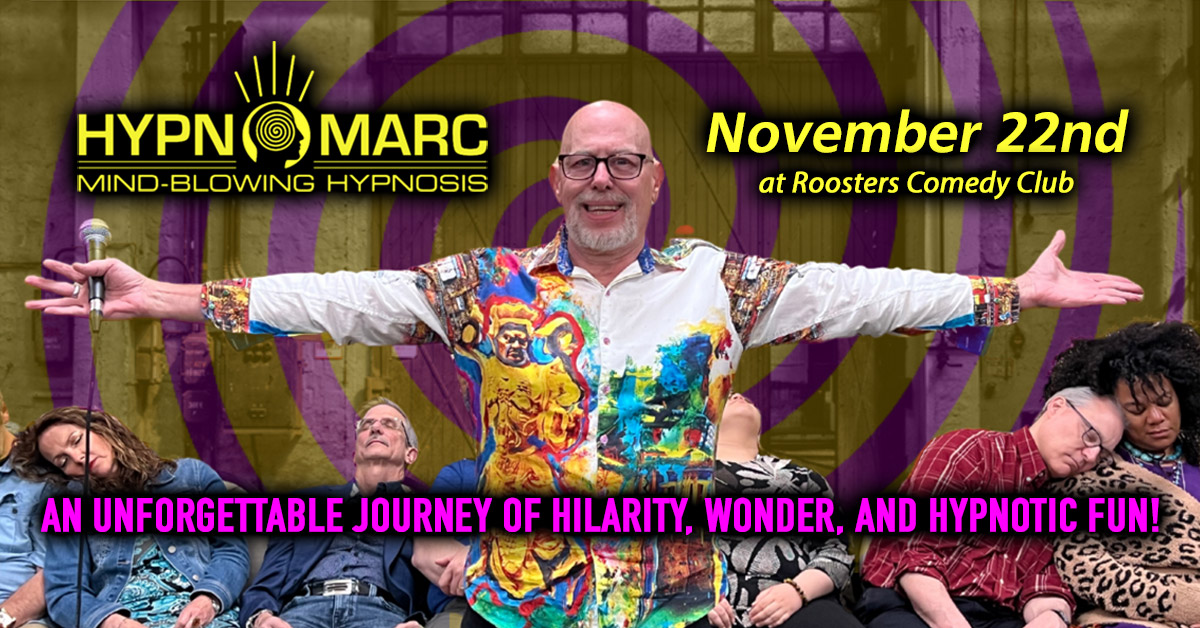
The 7 Hidden Principles Behind Every Great Comedy Hypnosis Show

It’s Not Chaos — It’s Choreography

People often ask, “How do you get total strangers to do those crazy things on stage?”
Simple answer: it’s not mind control. It’s mind choreography — built on seven hypnotic principles that make audiences laugh, volunteers shine, and skeptics believe.

When you understand what’s really happening beneath the laughter, you realize every great comedy hypnosis show is part art, part psychology, and part magic.

1️⃣ Focus of Attention

Comedy hypnosis begins long before anyone closes their eyes.
The hypnotist’s first job is to focus the audience’s attention — through humor, surprise, or curiosity.
The moment you laugh or lean in, your attention narrows, and that focus is the first step into trance.
As I like to say: where attention goes, hypnosis flows.


2️⃣ Bypass of the Critical Mind

Laughter is the world’s friendliest trance inducer.
When people laugh, they stop analyzing.
That’s why jokes, stories, and playful challenges are built into every induction — each laugh opens the subconscious a little wider.


3️⃣ Utilization of Expectation

Expectation is hypnosis fuel.
From the first line of the pre-talk, the audience is primed to expect something amazing.
That anticipation becomes the permission slip for the subconscious to play.
The mind follows what it believes will happen — so we build belief first, and trance follows.


4️⃣ Pacing and Leading

Every volunteer starts nervous or skeptical.
The hypnotist matches that state — using humor, rapport, and rhythm — then gently leads them into comfort, focus, and imagination.
This pacing builds trust, and trust builds compliance.


5️⃣ Progressive Dissociation

This is where the fun begins.
The conscious and subconscious split just enough for new possibilities to emerge.
That’s why someone can know they’re on stage yet genuinely forget their name or think they’re Elvis.
The conscious mind steps aside so the creative mind can perform.


6️⃣ Anchoring and Association

Every word, gesture, or song cue becomes an anchor.
When I say, “Sleep!” or snap my fingers, the body reacts instantly because the subconscious links that signal to trance.
Anchors keep the show tight, repeatable, and wildly entertaining.


7️⃣ Fractionation and Reinforcement

Each return to hypnosis deepens the response.
Volunteers wake up laughing, then drop back down even faster.
The repetition strengthens the experience — like layering laughter and trance until both hit peak intensity.


Why It Works

What the audience sees as spontaneous chaos is actually a beautifully orchestrated blend of psychology, timing, and suggestion.
The volunteers aren’t under control — they’re free of inhibition.
They’ve entered a focused, creative state where imagination becomes reality and laughter becomes the language of trance.

That’s the real magic of a comedy hypnosis show:
it’s entertainment powered by the subconscious.


Experience It Live

🎟️ Don’t just watch hypnosis — feel it.
Catch HypnoMarc’s Hypnotic Hijinks Comedy Hypnosis Show at Rooster T. Feathers Comedy Club, Nov 22 @ 8:00 PM.
👉 Get tickets now at 541tickets.com before they disappear faster than your sense of dignity on stage.


#Hypnosis #ComedyHypnosis #HypnoMarc #StageHypnosis #HypnoticHijinks #LiveComedy #MindPower #Entertainment

Halloween Horror Nights 2025: Why Art the Clown Is Re-Igniting America’s Fear of Clowns

Halloween Horror Nights 2025
Why Art the Clown Is Re-Igniting America’s Fear of Clowns

Just in time for Halloween, Universal Studios’ Halloween Horror Nights 2025 has unleashed a new nightmare—Art the Clown. Fans are calling it one of the most terrifying HHN experiences ever, and for people already uneasy around clowns, it’s pure nightmare fuel.

Every year around this season, I get phone calls from people with one very specific phobia: coulrophobia—the fear of clowns. And when a cultural icon of horror like Art steps into the spotlight, that fear skyrockets. People feel trapped, anxious, even paralyzed—sometimes weeks before they set foot in a haunted attraction.

Why Clowns Trigger So Much Fear

The unease isn’t random—it’s deeply wired into how our brains process danger.

  • Generational split: Boomers grew up with Bozo and Clarabel—clowns were goofy, harmless fun.
  • The darker turn: Gen-X and Gen-Y were blindsided by John Wayne Gacy, the “Killer Clown,” in the 1970s. Laughter turned to terror overnight.
  • Pop culture fuel: From Pennywise (IT) to Twisty (American Horror Story) to The Joker, clowns became the perfect vessel for evil. Now, Art the Clown is cementing his place at the top of that horrifying lineup.

As Olivia Goldhill wrote in The Telegraph:

“The more you stare at a clown’s perpetually smiling face, the more it warps into something more sinister.”

That frozen smile, the distorted features, the unnatural exaggeration—it all taps straight into the fight-or-flight center of your brain. And once your subconscious files “clown = danger,” the fear loop begins.

Why Halloween Makes It Worse

October is clown season. They’re not just on movie posters anymore—they’re in haunted houses, on front lawns, in commercials, and now headlining the premier Halloween event in the country.

For someone with coulrophobia, it’s not fun—it’s exhausting. Every sighting reinforces the fear, and every avoidance strengthens the loop that keeps the phobia alive.

Hypnosis: The Secret Weapon Against Phobias

Phobias aren’t just “in your head.” They’re subconscious loops—old fear tapes your brain keeps replaying. Hypnosis allows you to rewrite those loops at the source.

I’ve worked with clients paralyzed by fears of clowns, snakes, spiders, heights, bridges—you name it. Once we address the root trigger, the fear dissolves. Imagine being able to walk through HHN—or past a clown costume in the street—without that spike of terror.

Time is Short—Halloween Is Here

This is the moment to decide:

  • Keep avoiding clowns—and spend October stressed, anxious, and on edge.
  • Or break free now—and enjoy the season without panic.

My hypnosis sessions for October book quickly. Once they’re gone, that’s it—you’ll be facing Halloween with the same fear you’ve always had.

STOP letting fear win.
START living free from anxiety.
ACT NOW before Art the Clown becomes your worst nightmare.

Contact me at info@hypnomarc.com or visit www.hypnomarc.com to secure your session today.

About Marc Marshall, CPH

Marc Marshall is a certified comedy hypnotist and clinical hypnotist, author, and motivational speaker who has spent more than 50 years helping people break free from limitations. On stage, his Hypnotic Hijinks of HypnoMarc comedy hypnosis show has entertained audiences across the country with laughter, wonder, and unforgettable experiences.

Off stage, Marc specializes in helping clients resolve trauma, fears, phobias, and stress management—transforming lives through the power of hypnosis. His programs have helped people worldwide eliminate anxiety, overcome phobias, manage pain, quit smoking, and unlock lasting confidence.

Marc is also the author of several books, including:

  • Perception Equals Reality — breaking free from self-limiting beliefs.
  • Your Search is Over: The Ultimate Guide to Finding Your Soulmate — blending hypnosis, coaching, and healing to attract deep connections.
  • Staying in the Moment: Helping Students Achieve More Through Mindfulness Meditation — a guide for educators and students alike.
  • And his soon to be released – There’s No Such Thing As Try

Through both his stage shows and clinical work, Marc’s mission is simple: to help people laugh harder, live freer, and release what holds them back.

Fear doesn’t take the night off at Halloween Horror Nights. But with hypnosis, you can.

(All photos property of respective studios)

The Role of Visualization in Anxiety Management

The Role of Visualization in Anxiety Management

Do you ever feel like your anxiety is a raging thunderstorm in your brain, complete with thunder, lightning, and torrential downpours of worrying thoughts? Yeah, me too. Anxiety can feel overwhelming and uncontrollable at times. But what if I told you there’s a simple mental technique that may be able to help calm that inner storm? It’s called visualization, and it could be a game-changer for your anxiety management.

Visualization is the practice of creating vivid mental images or scenes in your mind. It’s a skill that’s often used in sports psychology to help athletes perform at their best. But it can be just as powerful for managing anxiety and stress. By imagining calming, peaceful scenarios, you can trigger a relaxation response in your body and interrupt the anxiety feedback loop.

“Visualization is a powerful tool because it allows you to access your subconscious mind and tap into your innate ability to self-soothe,” explains Marc Marshall, a renowned hypnotherapist and anxiety expert. “When you create serene, comforting mental images, it sends signals to your brain that it’s safe to relax.”

So how exactly does visualization work for anxiety?

Well, it goes a little something like this:

Let’s say you’re feeling worried and tense about an upcoming presentation at work. Your heart is racing, your palms are sweaty, and your mind is spinning with anxious thoughts. In that moment, you could close your eyes and imagine yourself in a peaceful, beautiful setting – maybe a sun-dappled forest or a tranquil beach. As you visualize the sights, sounds, and sensations of this calming scene, your body and mind start to respond accordingly. Your heart rate slows, your muscles relax, and your worrying thoughts start to quiet down.

“The key is to engage all of your senses in the visualization,” advises Marshall. “The more vivid and immersive you can make the mental image, the more effective it will be for relieving anxiety.”

Reader Reward -> Grab A POWERFUL Free Gift

So what should you visualize?

That’s the fun part – you get to be creative! Some popular anxiety-reducing visualization scenarios include:

  • A serene, secluded beach with gentle waves lapping at the shore
  • A lush, verdant forest with sunbeams filtering through the trees
  • A cozy, firelit cabin nestled in the mountains
  • A grassy meadow dotted with colorful wildflowers
  • A tranquil lake or pond with calming, reflective water

The key is to choose a scene that feels particularly soothing and restorative to you. It could be a place you’ve been before or a completely imaginary location. The most important thing is that it allows you to feel a sense of peace, safety, and comfort.

And don’t be afraid to get detailed! The more you can engage your senses, the better. Imagine the warm sunshine on your skin, the cool breeze ruffling your hair, the earthy scent of the forest, the soft chirping of birds. The more immersed you can become in the visualization, the more powerful the calming effects will be.

Of course, visualization isn’t a cure-all for anxiety. But it can be a valuable tool in your overall anxiety management toolkit, alongside other strategies like deep breathing, meditation, and talking to a hypnotherapist like Marc Marshall. “Visualization works best when it’s practiced regularly, not just in the heat of the moment,” Marshall advises. “The more you engage in it, the more automatic and effective it will become.”

So the next time you feel that familiar wave of anxiety starting to build, don’t just grit your teeth and bear it. Take a few minutes to close your eyes and transport yourself to your happy place. With a little bit of practice, you may just find that your mental thunderstorm starts to clear up. And who knows, you might even be able to keep your cool during that big presentation after all.

Hey Marc - Let's Talk

Disclaimer: This article is for informational purposes only and should not be considered medical advice. Always consult with a qualified healthcare provider before starting any new treatment plan.

“The Mind’s Hidden Switch: How Hypnosis Can Silence Your Anxiety”

Embracing The Hypnotic Mind: Unlock Your Subconscious Power to Calm Anxiety

In our fast-paced, high-stress world, anxiety has become an all too common companion. From looming deadlines to endless commitments, our minds are constantly bombarded with worries and fears that can leave us feeling overwhelmed and drained. While traditional coping methods like therapy and medication can be effective, an intriguing alternative approach has been gaining traction: the science of hypnotic suggestion.

At its core, hypnosis is a state of focused attention and heightened suggestibility, where the conscious mind takes a backseat, allowing the subconscious to become more accessible and receptive to positive change. By harnessing the power of suggestion during this trance-like state, hypnotherapists can help individuals reframe their perceptions, overcome limiting beliefs, and ultimately, achieve a profound sense of calm in the face of anxiety.

The Neuroscience of Hypnotic Trance

To understand how hypnosis can alleviate anxiety, it’s essential to explore the intricate workings of the human brain. During a hypnotic trance, the brain’s activity shifts from the analytical left hemisphere, associated with logic and reasoning, to the more imaginative and intuitive right hemisphere.

This shift is facilitated by the relaxation techniques employed by hypnotherapists, which can include deep breathing exercises, progressive muscle relaxation, and guided imagery. As the mind enters a state of focused attention, brain waves slow down, and the individual becomes more open to suggestion.

Neuroimaging studies have revealed that during hypnosis, there is increased activity in the anterior cingulate cortex, a region associated with self-control and emotional regulation. Additionally, the amygdala, the brain’s fear center, shows reduced activity, potentially explaining the diminished anxiety response.

Read my Book – Perception Equals Reality and change your life
Click the Book to get your Copy

The Power of Suggestion: Rewriting Subconscious Beliefs

At the heart of hypnotherapy lies the power of suggestion – carefully crafted verbal cues that bypass the conscious mind’s critical filter and speak directly to the subconscious. These suggestions can help individuals reframe their perspectives on anxiety, replacing limiting beliefs with more empowering ones.

For instance, a hypnotherapist might suggest that the individual visualizes their anxiety as a dense cloud gradually dissipating, revealing a clear, calm sky. Or, they might encourage the individual to perceive anxiety as a fleeting sensation, rather than an overwhelming force.

By repeatedly exposing the subconscious mind to these positive suggestions during the heightened state of hypnosis, the brain begins to adopt these new perspectives as its default response. Over time, this can lead to a remarkable shift in how the individual perceives and experiences anxiety.

Real-World Applications and Case Studies

While the theoretical foundations of hypnosis for anxiety relief are compelling, it’s the real-world success stories that truly illustrate its potential. Countless individuals have found solace and empowerment through hypnotherapy, overcoming debilitating anxiety and reclaiming control over their lives.

Take the case of Debra, a marketing executive who had struggled with crippling social anxiety for years. After countless failed attempts with traditional therapies, she decided to give hypnosis a try. Through a series of sessions focused on building self-confidence and reframing her perception of social situations, Debra gradually began to experience a profound shift.

“It was like a veil had been lifted,” she recalls. “Suddenly, I could attend meetings and networking events without the overwhelming fear and self-doubt that had plagued me for so long. Hypnosis helped me realize that my anxiety was just a distorted perception, not a reflection of reality.”

Similarly, Mason, a college student, had been grappling with severe test anxiety, which was hampering his academic performance. After working with a hypnotherapist to address his limiting beliefs around failure and perfectionism, he found himself approaching exams with a newfound sense of calm and clarity.

“Hypnosis taught me to perceive tests not as life-or-death situations, but as opportunities to showcase my knowledge,” Mason explains. “By changing my mindset, I was able to perform at my full potential and achieve far better results.”

Reader Reward -> Grab A POWERFUL Free Gift

Integrating Hypnosis into Your Anxiety Management Toolkit

While hypnotherapy can be an incredibly powerful tool, it’s important to approach it with an open mind and realistic expectations. Hypnosis is not a magic cure-all, but rather a complementary approach that can enhance other anxiety management strategies.

To maximize the benefits of hypnosis, I recommend you work with a qualified, experienced hypnotherapist, like me, who can tailor the sessions to your specific needs and goals. Additionally, practicing self-hypnosis techniques, such as visualization exercises and affirmations, can reinforce the positive changes initiated during professional sessions.

It’s also crucial to embrace a holistic approach to anxiety management, incorporating practices like mindfulness meditation, regular exercise, and a balanced diet. By addressing anxiety from multiple angles, you can create a comprehensive support system for your mental well-being.

Conclusion: Embracing the Hypnotic Mind

In a world where anxiety has become a pervasive challenge, the art of hypnotic suggestion offers a powerful tool for transformation. By tapping into the subconscious mind’s vast potential, individuals can rewrite limiting beliefs, reframe perceptions, and ultimately, cultivate a profound sense of calm and resilience.

Whether you’re grappling with social anxiety, test-related stress, or the general pressures of modern life, embracing the hypnotic mind can be a game-changer. By stepping into this altered state of consciousness, you may unlock the key to overcoming your fears, silencing your inner critic, and embracing a life of greater peace and fulfillment.

So, why not embark on this journey of self-discovery? Open your mind to the possibilities of hypnosis, click the link below for your free no obligation consultation and prepare to unlock the extraordinary power that lies within your subconscious mind – a power that can help you not only manage anxiety but thrive in the face of life’s challenges.

Hey Marc - Let's Talk